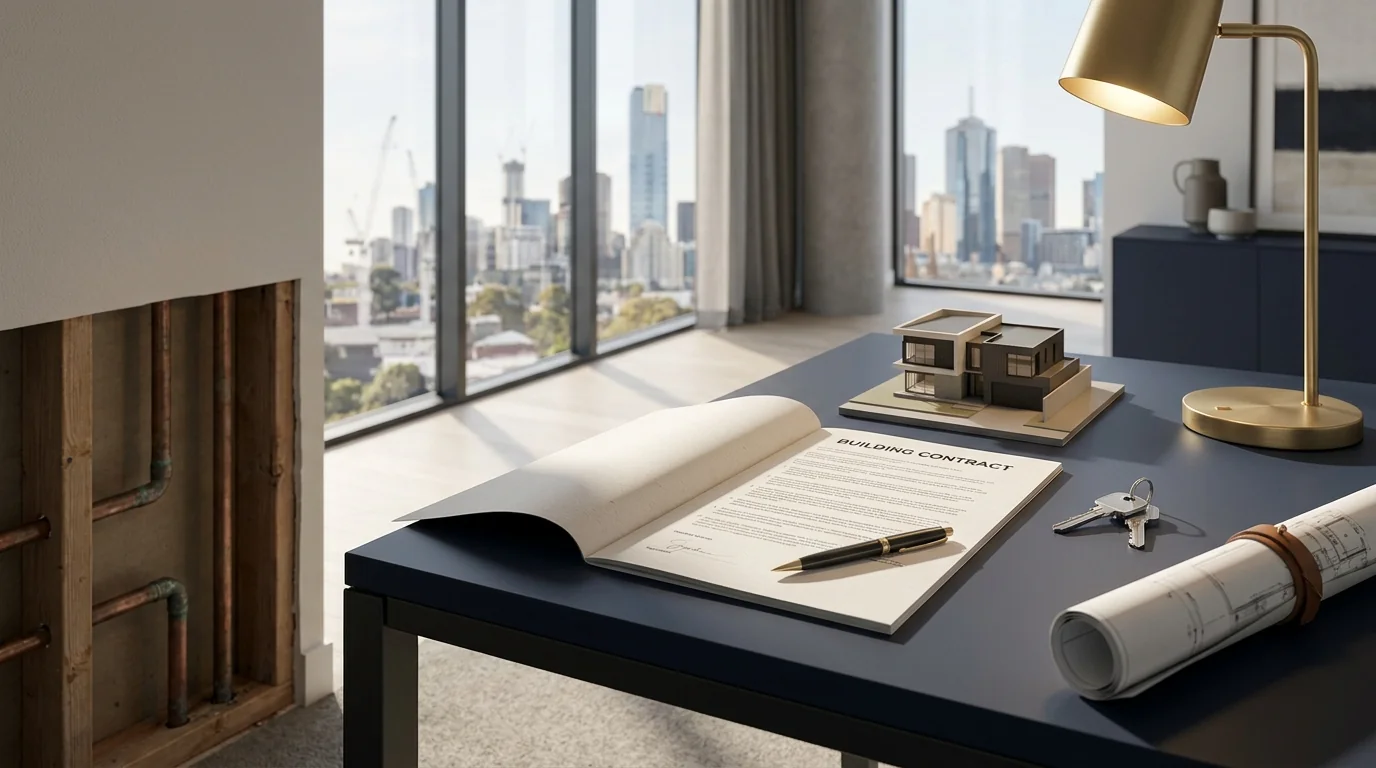
A building contract review before signing is a significant and cost-effective step you can take to protect yourself during construction. Once you sign, you are bound by every clause, whether you understood it or not. Most homeowners read their contracts, but reading and understanding are different things. The clauses that cause significant issues often look harmless until something goes wrong.
Use the following points as a starting point before you sign, or as a guide for what to discuss with a lawyer if you require urgent legal assistance.
1. Scope of Works and Specifications
The scope of works defines exactly what the builder will deliver. Vague descriptions create disputes. If your contract says "quality kitchen cabinetry" without specifying the brand, material, or finish, you may end up with something very different from what you expected.
Check that the contract includes:
- Detailed specifications for all materials, including brands and model numbers where possible
- Clear descriptions of inclusions and exclusions
- Reference to architectural drawings and engineering plans by date and version number
- A process for documenting any changes to specifications during the build
If the builder says something will be included but it is not written in the contract, ask for it in writing. Verbal promises are difficult to enforce.
2. Contract Price and Payment Schedule
The Domestic Building Contracts Act 1995 (Vic) regulates payment schedules for residential building work. Progress payments must be linked to specific stages of work, and the builder cannot demand payment before completing each stage.
Look for:
- A clear breakdown of the total contract price
- Progress payment amounts tied to defined stages (base, frame, lock-up, fixing, completion)
- The deposit amount (capped at 10% for contracts under $20,000 or 5% for contracts of $20,000 or more in Victoria). Note that under the 2025 Amendment Act, these limits will move into regulations by December 2026.
- Whether GST is included or excluded from stated prices
Some contracts front-load payments, meaning you pay more in the early stages than the work completed justifies. This creates risk if the builder becomes insolvent or abandons the project.
3. Variations and Cost Adjustments
Variations are changes to the original scope of work. They are common in construction, but poorly drafted variation clauses can leave you paying far more than expected.
Your contract should specify:
- How variations are requested and approved (ideally in writing before work begins)
- How variation costs are calculated and documented
- Whether you have the right to refuse a variation
- Time limits for disputing variation costs
Watch for clauses that allow the builder to make changes and charge you without prior written approval. Industry reports on construction contracts often identify unclear variation processes as a common source of disputes.
4. Building Contract Review: Timeframes and Delays
Construction projects rarely finish on the exact date promised. Weather, supply chain issues, and subcontractor availability all cause delays. The question is who bears the risk when delays occur.
Check whether your contract includes:
- A defined start date and completion date
- A list of events that entitle the builder to an extension of time
- Notice requirements the builder must follow to claim an extension
- Your rights if the builder causes unreasonable delays
Some contracts give builders broad rights to extend the completion date for almost any reason. Others impose no real consequences for finishing late. Neither protects you well.
5. Defects Liability and Warranty Periods
The defects liability period is the window after completion during which the builder must fix defective work at no cost. In Victoria, statutory warranties are enforceable for 10 years from the date of the occupancy permit or certificate of final inspection, pursuant to section 134 of the Building Act 1993. While Domestic Building Insurance (DBI) provides coverage for six years for structural defects and two years for non-structural defects in specific circumstances, the statutory warranties themselves offer a broader protection period.
Look for:
- The length of the defects liability period
- The process for reporting defects
- Time limits for the builder to respond and rectify
- What happens if the builder fails to fix defects within the specified time
Understanding when the defects clock starts ticking matters more than most owners realise. The answer is not always straightforward.
6. Insurance and Indemnities
Builders must hold certain insurances by law, including domestic building insurance for projects over specified thresholds. But the contract may also require you to take out insurance or indemnify the builder against certain risks.
Check:
- What insurances the builder must hold and maintain
- Whether you must provide copies of any insurance policies
- Any indemnity clauses that shift risk to you
- Whether the contract requires you to insure the works during construction
Indemnity clauses can be broad. Some require you to compensate the builder for losses even when the builder was partly at fault.
7. Dispute Resolution Procedures
If something goes wrong, how will disputes be resolved? Going straight to court is expensive and slow. Most building contracts include dispute resolution procedures that must be followed first.
Your contract should specify:
- Steps for raising a dispute with the builder
- Whether mediation or adjudication is required before litigation
- Time limits for commencing dispute resolution
- Who pays the costs of any dispute resolution process
Some contracts require disputes to be resolved through arbitration, which can be binding. Understand what you are agreeing to before you sign.
8. Termination Rights
What happens if you need to end the contract early? What if the builder wants to walk away? Termination clauses define the circumstances in which either party can end the contract and the financial consequences.
Look for:
- The grounds on which you can terminate (builder default, insolvency, abandonment)
- The grounds on which the builder can terminate (non-payment, obstruction)
- Notice requirements before termination takes effect
- How payments and refunds are calculated on termination
- Ownership of materials on site if the contract ends early
Some contracts make termination very difficult for the owner but easy for the builder. This imbalance can leave you stuck with a non-performing builder or facing large penalties if you want out.
When to Get a Fixed Fee Lawyer Contract Review
This checklist helps you identify potential issues, but it does not replace professional advice. Building contracts often run to 30 or 40 pages, with schedules, annexures, and incorporated documents. Clauses interact with each other in ways that are not always obvious.
A fixed fee lawyer contract review gives you certainty about cost while ensuring someone with experience reads every clause. The same approach applies when reviewing business agreements before purchase.
Academic research, including studies from the University of Melbourne, suggests that domestic building contract legislation operates differently across states, with protections that often vary depending on the jurisdiction and the type of contract used.
If you are presented with a contract and asked to sign quickly, that urgency itself is a warning sign. Builders who want a fair working relationship will give you time to review the terms properly.
This information is general in nature. Contact us for advice specific to your situation.