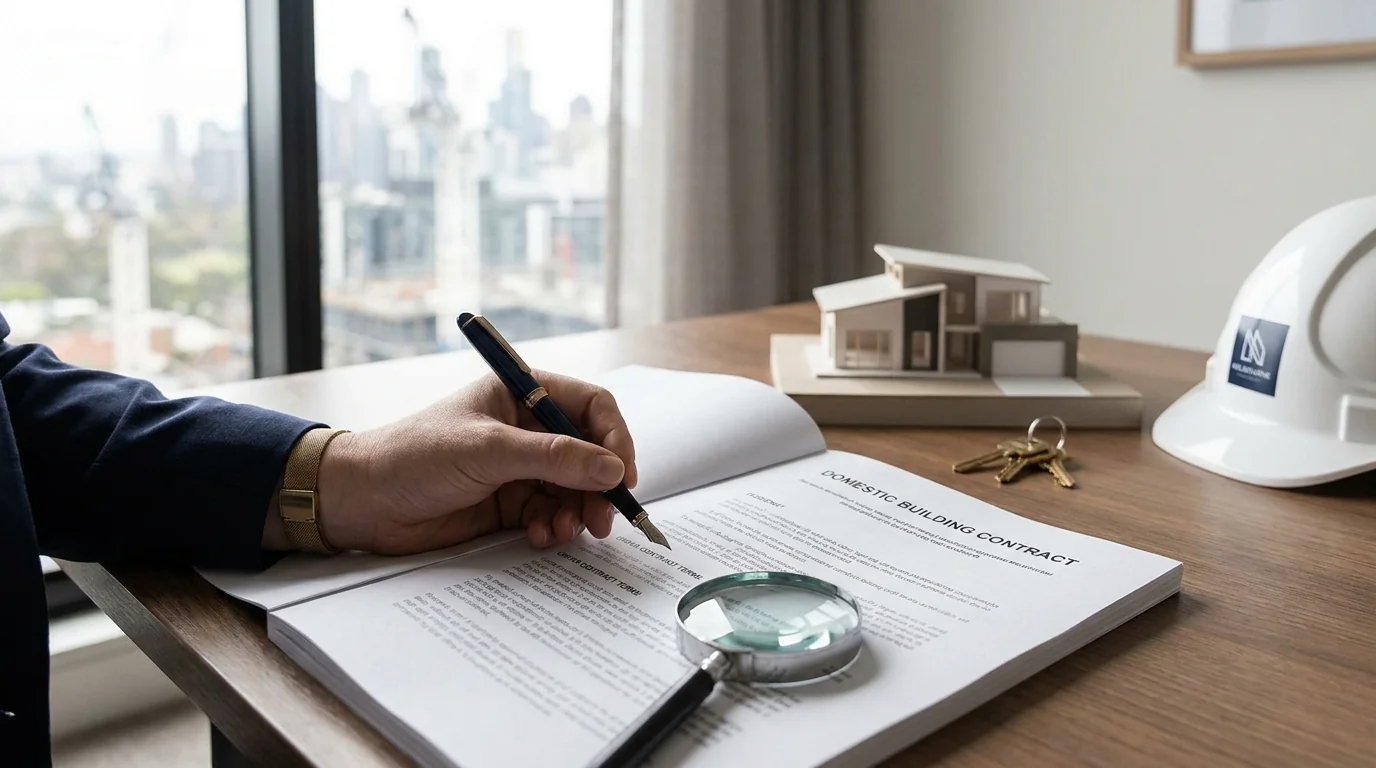
A variation you did not agree to, or a defect that only shows up once the plaster is off, can turn a straightforward build into a costly argument. The difficulty is that by the time either problem appears, the paperwork is already signed. That is why a proper building contract review before signing matters more than most homeowners realise. The clauses that decide who wears the cost are usually buried in the fine print, and they are far easier to negotiate before the first sod is turned than after.
Two issues cause a large share of residential building disputes: latent defects and builder variations. The focus here is on what you should be looking for in your contract before you commit, rather than what to do once things have gone wrong.
What Is a Latent Defect?
A latent defect is generally understood as a problem that is not reasonably apparent, and not discoverable through an appropriate inspection, at the time it matters. It is different from an obvious defect. A cracked tile or a door that does not close is visible. A latent defect might be concealed structural damage, defective materials, or ground conditions that only become clear once excavation begins or a wall is opened up.
The label itself settles nothing. Whether something counts as latent depends on the circumstances, including what a reasonable inspection would have revealed, and on how your contract defines the term. Some contracts may use "latent condition" rather than "latent defect", and those terms may not always be treated the same way. If your contract does not define the phrase clearly, you are leaving the question open for a later argument.
Can a Builder Charge Extra for a Latent Defect?
Discovering an unexpected problem does not automatically entitle a builder to charge more. Three questions usually decide it.
- Was the condition genuinely unforeseen? If the builder could reasonably have identified it before signing, treating it as latent becomes harder to justify.
- Was the work already in scope? If the plans, specifications or contract price already covered the work, calling it "additional" does not make it a variation.
- Does the contract allow it? Clauses dealing with latent conditions and variations set out notice requirements, pricing methods and approval steps. The builder generally has to follow them.
This is the point where a review before signing can help you understand how the contract allocates the risk of a hidden problem, so you know what you are actually agreeing to. Different standard-form contracts may handle this differently, so it can be worth comparing how each one allocates that risk before you choose which one to sign. In Victoria, the Domestic Building Contracts Act 1995 also sets rules that apply regardless of which form you use, including limits on when a builder can vary the contract and require extra payment.
How a Variation Should Be Handled
A variation should never arrive as a surprise line item at the end of the job. A workable process looks like this:
- Document the issue. Photographs, inspection reports and site records showing what was found and when.
- Check the contract. Identify the variation, latent condition, notice and approval clauses that apply.
- Give written notice. Explain what work is proposed and why it is needed. Vague descriptions cause trouble later.
- Set out cost and time impact. State the additional cost and whether the completion date is affected.
- Get approval before starting. Doing the work first and negotiating afterwards makes any dispute much harder to resolve.
When you review your contract before signing, check whether these steps are actually required in writing, who must approve a variation, and whether there is a cap on how much the price can move. A contract that allows variations with no written approval process gives you very little protection.
Where Variations Turn Into Disputes
Arguments typically start in a few predictable places. The owner believes the work was already included in the contract price. The builder did not follow the required notice process. A variation is issued after the work is finished. The price seems out of proportion to the work. Or the alleged latent condition could reasonably have been found earlier.
Responsibility for the underlying defect is another common flashpoint. If the defect stems from the builder's own work, that is a different question from a genuinely hidden site condition, and the contract and the law may treat them differently.
Clear contracts, written communication and supporting evidence make these disagreements easier to manage. If a dispute has already developed, getting advice early is generally better than letting positions harden.
Reducing the Risk Before You Sign
Prevention is easier than untangling a dispute mid-build. Detailed plans and specifications should define the original scope as tightly as possible, because the clearer the scope, the harder it is to argue that something was extra. Appropriate site investigations before work begins can identify potential issues early, and it is worth checking whether your contract makes any allowance for them.
Both parties should understand the latent-condition clauses and keep written records as the job progresses. Beyond latent defects, there are other areas worth checking before you commit, including whether protection works apply to your project and what your obligations are to neighbours. A broader building contract review checklist can help you work through the main risk areas systematically.
It is also worth knowing that home building contract law is under active review in some states. If you are building outside Victoria, check the rules that apply in your state, as requirements can differ.
What a Contract Review Actually Covers
A review of your domestic building contract before signing typically looks at the variation and latent condition clauses, the notice and approval process, the payment schedule, the scope definition, and the dispute resolution provisions. The aim is to identify where the risk sits and whether anything should be negotiated or clarified before you sign.
We handle fixed fee contract reviews at Sutton Laurence King Lawyers, with a 48-hour turnaround. If you are presented with a building contract and want to understand the variation and latent defect terms before you commit, get in touch to discuss a review.
This information is general in nature. Contact us for advice specific to your situation.